
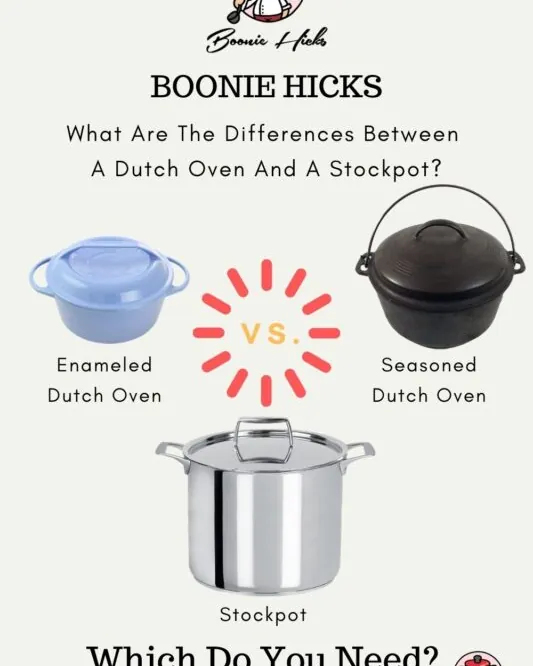
No — a stock pot and a Dutch oven aren’t the same thing. A stock pot is tall, thin-walled and made for boiling liquid. A Dutch oven is wide, heavy and thick-walled, so it holds heat and works in the oven too.
The one condition that decides which pot you reach for is what you’re cooking. Clear broth, pasta and big batches of soup want the stock pot. Braises, bread and anything that starts on the stove and finishes in the oven want the Dutch oven.
Stock pot vs Dutch oven: the short answer
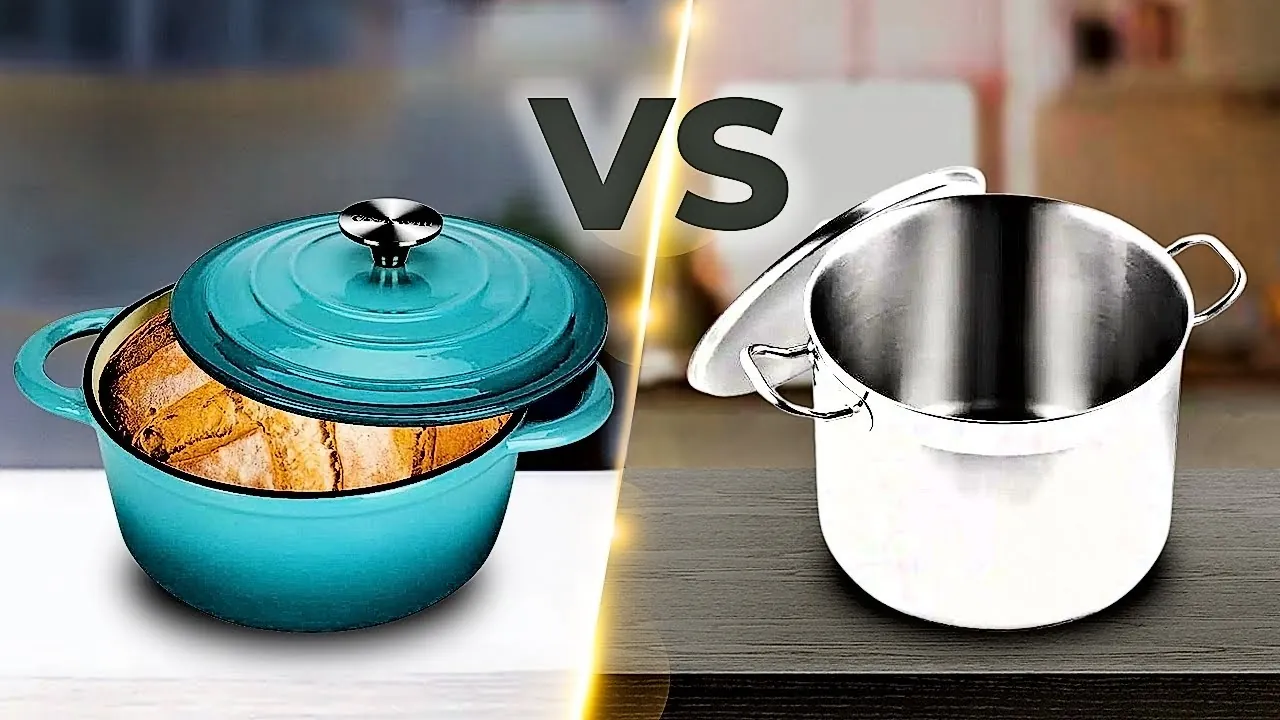
- Shape is the biggest tell. A stock pot is tall and narrow, so liquid evaporates slowly. A Dutch oven is wide and shallow, so liquid reduces faster.
- Wall thickness decides browning. Dutch ovens are cast iron or thick clad metal and hold heat. Thin stock pots lose heat the moment food goes in.
- Lids differ in weight. A Dutch oven lid is heavy and traps steam for oven braising. A stock pot lid is light and mostly stops splashing.
- Oven safety isn’t automatic. Most Dutch ovens are oven-safe to 400°F or higher, but check your own pot’s manual — handles and knobs set the real limit.
- Size runs differently. A 12-quart stock pot is normal for stock. A 12-quart Dutch oven is unusually large; the typical Dutch oven is 5 to 7 quarts.
- Neither is nonstick by default. Bare cast iron and enamel both need fat, and both can stain with long-simmering stock.
Why they behave so differently
The difference is surface area and thermal mass. A tall, narrow pot exposes less liquid to the air, so a long simmer loses less water.
Thermal mass is the other half. Cast iron and heavy clad steel store a lot of heat, so the temperature barely drops when cold meat hits the pan. A thin stock pot drops fast, and the food steams instead of browning.
Enamel coating adds one more thing: it’s non-reactive. Acidic tomato or wine sauces stay bright in an enameled Dutch oven, while bare aluminum in a cheap stock pot can turn them dull and metallic.
When the simple answer changes
| Situation | What changes | What to do instead |
|---|---|---|
| Making 8 quarts of stock | Stock pot wins on size | Use the stock pot, skim often |
| Searing then braising meat | Needs heat retention | Use the Dutch oven |
| Baking no-knead bread | Needs oven-safe lid | Dutch oven only, check knob rating |
| Small kitchen, one pot only | Storage is the limit | Buy a 5 to 7 quart Dutch oven |
| Frying in deep oil | Tall sides stop splatter | Stock pot, with a thermometer |
| Induction cooktop | Base must be magnetic | Check the base before buying |
How to pick and use the right one
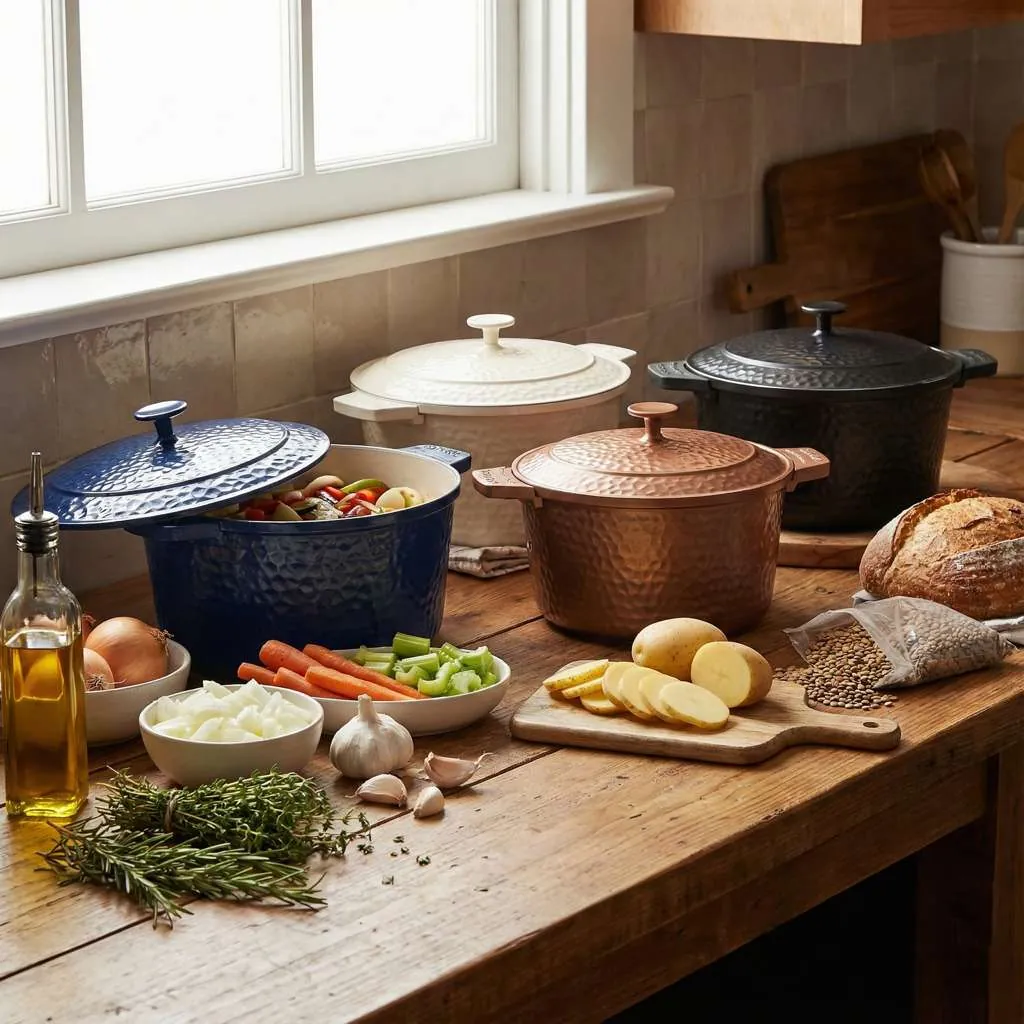
- Match the pot to the job first. If your recipe says “simmer uncovered for 2 hours,” reach for the wide Dutch oven; if it says “bring 6 quarts to a boil,” use the stock pot.
- Check oven safety before it goes in. Read the manual for the maximum temperature — many Dutch ovens are rated to 400°F or 500°F, but plastic knobs and some handles are lower.
- Preheat the Dutch oven over medium heat with 1 to 2 tablespoons of oil already in it before searing. The meat should sizzle the moment it touches.
- Brown in batches of 1 layer. Crowding drops the pan temperature and steams the meat; give each batch 3 to 4 minutes per side before turning.
- Deglaze with 1/2 cup of wine or stock right after browning, scraping the brown bits up with a wooden spoon. That’s where the flavor lives.
- Simmer stock at a bare bubble, not a rolling boil. A hard boil makes stock cloudy and can scorch the bottom of a thin pot.
- Cool leftovers fast. The USDA FoodSafety.gov guidance says cooked food shouldn’t sit out more than 2 hours; divide big batches into shallow containers so they cool quicker.
- Reheat leftovers to 165°F, checked with a thermometer in the thickest part, whether they came out of a Dutch oven or a stock pot.
Mistakes that spoil the result
- Using a thin stock pot for a braise. It can’t hold heat, so the meat stews in its own juice and never browns properly.
- Putting a Dutch oven under the broiler without checking. Some lids and handles aren’t rated for it, and the enamel can crack.
- Filling either pot past two-thirds. Stock and pasta water foam up fast, and a boil-over on a gas burner is a real mess.
- Scrubbing enamel with metal tools. It leaves permanent scratches where food sticks from then on; use wood or silicone instead.
Capacity is the number that changes your choice. A 5 to 7 quart Dutch oven covers most home cooking, but if you regularly make stock or cook for a crowd, the 12 quart stock pot earns its shelf space.