
Saucepans are deep, round cooking pots with a long handle and, usually, a lid. You use them for anything that cooks in liquid or needs stirring — boiling pasta, simmering soup, making rice, heating milk, or reducing a sauce. Their high sides hold more liquid than a frying pan and keep it from splashing out.
What saucepans are used for
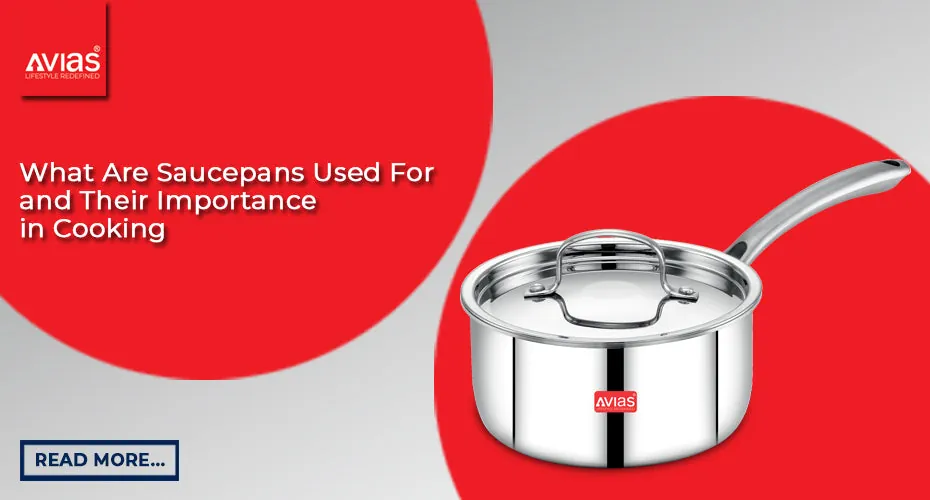
A saucepan’s tall sides and tight lid trap steam, so heat stays inside and liquid doesn’t evaporate fast. That’s why it handles wet cooking so well. A frying pan is shallow and wide, built for browning and quick contact with high heat. A saucepan is built for the opposite job: slow, even, contained cooking.
The lid matters more than people expect. Leave it on and you keep both heat and moisture. Take it off and you let steam escape, which is how you thicken a sauce or reduce a liquid. Same pot, two very different results.
Common Jobs and How Much Liquid to Use
| Job | Pan size | Liquid to add | Lid on or off |
|---|---|---|---|
| Boil pasta | Large (4–6 qt) | Fill about two-thirds | Off |
| Cook rice | Medium (2–3 qt) | Water about 1.5 times the rice | On |
| Simmer soup | Large (4–6 qt) | Half to two-thirds full | Mostly on |
| Heat milk | Small (1–2 qt) | No more than half | Off, stir often |
| Reduce a sauce | Small to medium | A quarter to a third | Off |
Never fill a saucepan past about two-thirds. Boiling water rises, and a full pot will spill over the sides and onto the stove. If you’re cooking something starchy like pasta or potatoes, that foam climbs fast.
Tip: For rice and grains, keep the lid on and don’t stir. Lifting the lid releases the steam that’s actually cooking the food.
When a Saucepan Is the Wrong Choice
If you want a browned crust on meat, a seared steak, or crispy eggs, reach for a frying pan or skillet instead. A saucepan’s high walls trap steam, so food steams rather than browns. You’ll get grey, soft results.
A saucepan also isn’t the tool for deep-frying. The tall sides make it hard to lower food in safely, and hot oil can bubble over the rim. Use a dedicated deep pan or fryer for that.
If you only own one pot, a medium saucepan with a lid covers most everyday cooking — pasta, rice, soup, oats, and sauces. It won’t sear, but it’ll feed you.
Mistakes That Cause Problems
Why does my food stick to the bottom?
Heat that’s too high is the usual cause. Liquid boils away at the base before the rest of the pot catches up, and whatever’s underneath burns. Turn the heat down and stir more often, especially with milk, thick sauces, and anything with sugar in it.
Why did my pot boil over?
You filled it too high, or the heat was too strong for what’s inside. Starchy water foams up quickly. Leave space at the top next time.
Why does everything taste burnt?
Stir from the bottom, and move the pan to a smaller burner that matches its base. If the bottom is warped and rocks on the stove, the pan is done — replace it.
When to Replace It
A saucepan is worth keeping if the base sits flat and the handle is tight. Replace it when the nonstick coating flakes off into food, when the base has warped so badly it wobbles, or when a loose handle can’t be tightened. A wobbly pan on a hot burner is a burn waiting to happen.
Check the handle screw every few months with a screwdriver. That’s the one part that loosens on its own, and it’s the easiest fix you’ll ever do.
Why does my pan wobble on a flat stove?
A base that has warped from sudden temperature changes won’t sit flat anymore. Don’t plunge a hot pan into cold water — let it cool on the stove first. If the wobble is mild, it still works; if it rocks hard, replace it.
Can I use a saucepan in the oven?
Only if the whole pan is oven-safe, including the handle and lid. Metal handles with a riveted join usually are; plastic or wooden handles aren’t and will melt or crack. Check the maker’s label for a temperature limit before you put it in.
Which Pan Size Fits Which Job
| Pan size | Holds roughly | Best for |
|---|---|---|
| Small (1–2 qt) | 1–2 cups of liquid | Heating milk, melting butter, one egg |
| Medium (2–3 qt) | 3–6 cups | Rice, oats, sauces, small soup batches |
| Large (4–6 qt) | 8–12 cups | Pasta, soup, potatoes, corn on the cob |
Match the pan to the amount, not the other way around. A small pan filled to the top boils over fast, and a large pan with a little liquid heats unevenly and scorches at the base.
Frequently Asked Questions
Can you fry in a saucepan?
You can shallow-fry small items, but the high sides trap steam and stop food from crisping. For anything you want browned or crunchy, a frying pan or skillet does the job better.
Does a saucepan need a lid?
No, but a lid helps for rice, grains, and anything you want to cook with steam. Leave it off when you’re reducing a sauce or heating milk, so moisture can escape and you can stir.
Can you boil water faster with the lid on?
Yes. A lid traps heat inside the pot, so the water reaches boiling sooner and stays there on lower heat. Keep it on while you wait, then take it off before adding food.
Pick one medium saucepan with a tight lid and a flat base, and you’ll cover rice, pasta, soup, and sauces without buying anything else. Before your next meal, check that the handle screw is tight and the base sits flat on the burner — those two things decide whether the pan is still safe to use.