
A stock pot is a tall, wide, heavy pot used for making stock, broth, soup, and big batches of anything that needs a long, slow simmer. The tall sides slow evaporation, so you can cook for hours without topping it up. It also holds a whole chicken or a large batch of bones with room to spare.
What a stock pot is used for
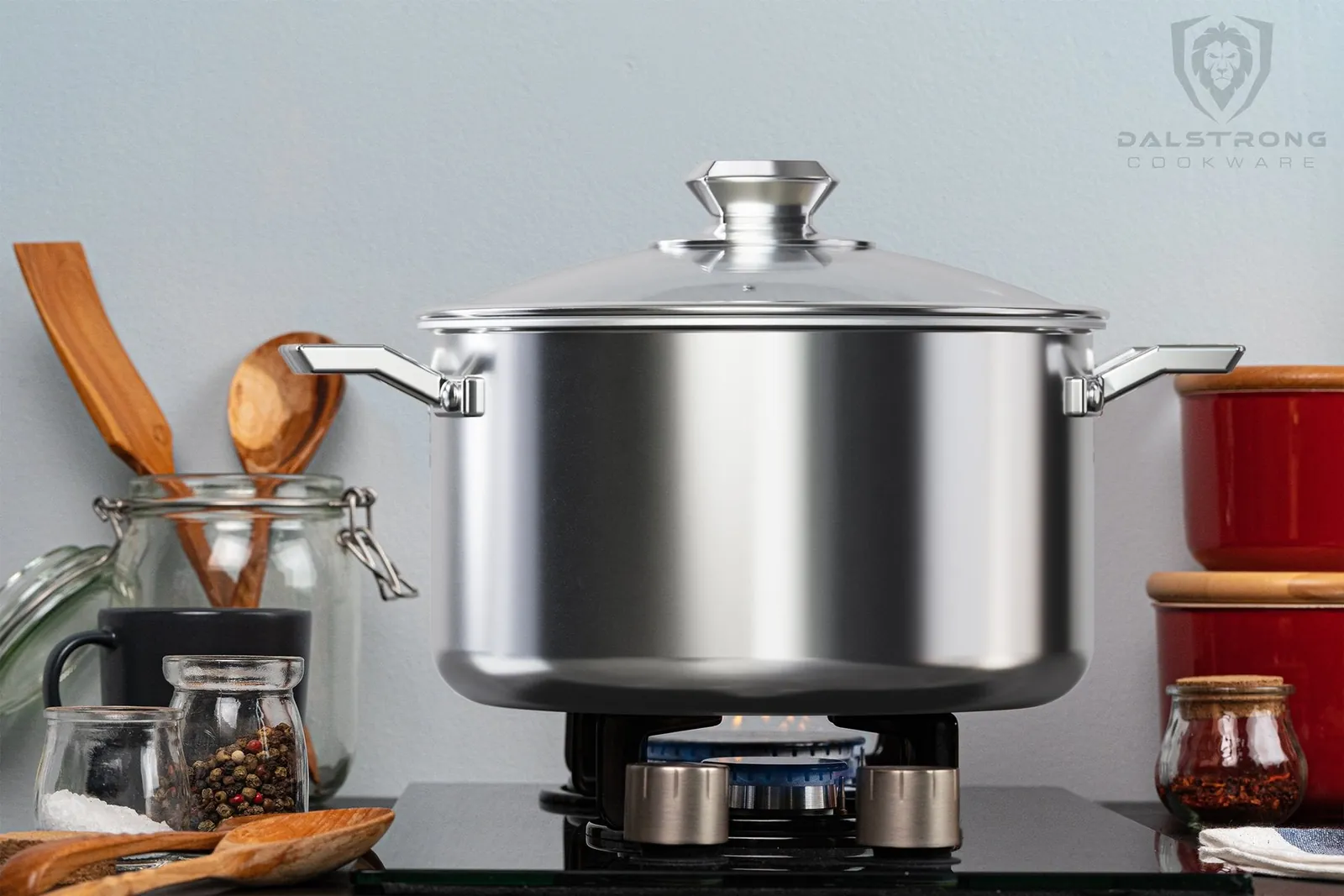
- Its tall, narrow shape limits evaporation, so a 12-quart pot can simmer 6-8 hours and lose only a small amount of liquid instead of reducing by half.
- The wide base gives you room to brown bones or sweat vegetables in one layer before adding water, which builds more flavor than skipping that step.
- Heavy bottoms — aluminum or copper sandwiched inside stainless steel — spread heat evenly, so you don’t get a scorched patch where the burner hits.
- A capacity of 8 to 12 quarts suits most home kitchens; a 16-quart or larger pot is for canning, crab boils, or cooking for a crowd.
- It works on the stovetop and, if the handles and base are oven-safe, in the oven too — check the manufacturer’s own temperature rating before you try it.
Why a stock pot works better than a regular pot
Tall sides are the whole point. A wide, shallow pot exposes more surface to the air, so liquid evaporates faster and flavors concentrate harder than you want for a stock. A stock pot’s depth cuts that surface area, which is why it can sit at a low simmer for hours and still taste clean at the end.
The heavy base matters just as much. Thin metal heats in patches, and a patch of high heat under bones or vegetables will brown them past the point you want. A thick, layered base holds the heat steady, so the liquid moves gently instead of boiling.
That gentle movement is the real trick. A hard boil pushes fat and tiny particles through the liquid and makes it cloudy. A bare simmer keeps them still, so they settle and you can skim them off. Your pot’s own manual will tell you which base it uses and what it’s rated for.
When a stock pot isn’t the right choice
Photo: www.webstaurantstore.com on Google
| Situation | What changes | What to do instead |
|---|---|---|
| Cooking for 1-2 people | 12 quarts is heavy and slow to heat | Use a 4-6 quart saucepan |
| Making a quick weeknight soup | A stock pot takes 10+ minutes to heat | Use a Dutch oven or deep skillet |
| You want browning and depth | Stock pots brown food slowly | Use a wide skillet first, then transfer |
| Small kitchen, little storage | A 12-quart pot takes real shelf space | Use a 6-quart multi-use pot |
| Gas stove with small burners | A wide base overhangs and heats unevenly | Match pot width to your burner |
| Slow cooker recipes | A stock pot isn’t sealed like a slow cooker | Use the slow cooker as written |
How to use a stock pot properly
- Fill it no more than two-thirds full with water and bones or vegetables, so there’s headroom for a simmer without boiling over.
- Bring the liquid to a boil over high heat, then drop it to the lowest setting that still shows small bubbles — a bare simmer, not a rolling boil.
- Skim the gray foam that rises in the first 10-15 minutes with a ladle or spoon, then discard it; this is what keeps the final stock clear.
- Simmer uncovered for 2-4 hours for chicken or vegetable stock, and 6-8 hours for beef bones, adding hot water only if the level drops below the solids.
- Taste at the 2-hour mark: if it’s weak, keep going; if it tastes flat and thin, the stock was likely made with too little bones or vegetables for the amount of water.
- Strain through a fine-mesh strainer or cheesecloth into a second pot or bowl, pressing gently on the solids to get the last liquid out.
- Cool it fast by setting the pot in a sink of cold water, then refrigerate within 2 hours; skim the fat once it’s cold and solid on top.
Mistakes that ruin a batch
Photo: www.webstaurantstore.com on Google
- Boiling instead of simmering. A hard boil churns fat and particles into the liquid, and you get cloudy, greasy stock that never clears — even after straining.
- Skipping the skim. Leaving that gray foam in the pot gives the finished stock a dull, muddy taste that no amount of seasoning fixes.
- Adding salt at the start. Stock reduces as it cooks, so salt added early concentrates hard; season only after straining, when you can taste the real strength.
- Filling it to the brim. A pot filled past two-thirds has no room for a simmer, and it will boil over onto your stove within minutes.
- Cooling it on the counter overnight. A large pot of warm liquid stays in the temperature range where bacteria grow fastest; cool it in a cold-water bath and refrigerate within 2 hours.
The one number that changes everything
Capacity is the figure that decides whether a stock pot suits you, and it’s printed on the pot’s base or in its manual — read it there rather than guessing from how it looks. Next, check the pot’s oven-safe temperature before buying.