
No — a typical countertop ice maker uses about as much electricity as a small refrigerator, and usually less than a full-size fridge. Most models draw somewhere between 100 and 250 watts while they’re making ice, which works out to a few cents per batch in most US homes. The real number depends on how often it runs.
How Much Power an Ice Maker Actually Draws
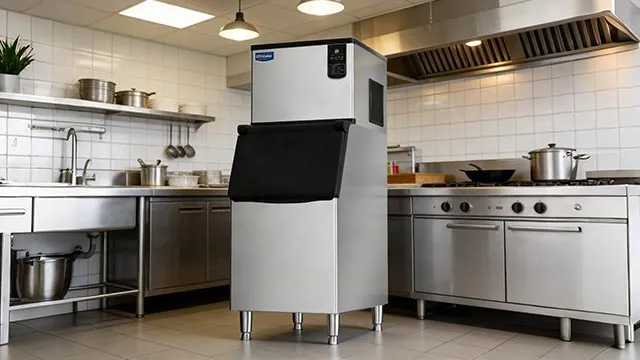
Portable countertop ice makers are the most common type in homes, and they’re the ones people worry about most. The motors and cooling parts inside them don’t run nonstop. They cycle on and off as the ice basket fills.
Here’s a rough guide to what you can expect:
| Ice maker type | Power while running | Typical daily use | What it costs you |
|---|---|---|---|
| Small countertop (under 26 lb/day) | 100–150 watts | 3–6 hours | A few cents a day |
| Large countertop (26–40 lb/day) | 150–250 watts | 4–8 hours | Under 25 cents a day |
| Built-in undercounter | 200–350 watts | Cycles all day | More, but still modest |
| Refrigerator ice maker | Adds little to fridge draw | Runs with the fridge | Barely noticeable |
Exact costs depend on your electricity rate, which varies a lot by state and by season. Check your utility bill for the price per kilowatt-hour if you want a real number for your home.
What Makes One Ice Maker Use More Than Another
The biggest factor is how cold the room is. A machine in a hot kitchen works harder and runs longer to make the same amount of ice. Putting it near a stove, oven, or in direct sun pushes the power use up.
The second factor is how much ice you ask for. A machine that runs all day to keep the basket full uses far more than one you switch on for a party and unplug afterward. If you only need ice occasionally, you’ll save real money by turning it off between uses.
Tip: Let the first few batches drop before you judge the power use. A warm machine works hardest at the start, then settles into a lighter rhythm once the inside is cold.
Is It Cheaper Than Buying Bagged Ice?
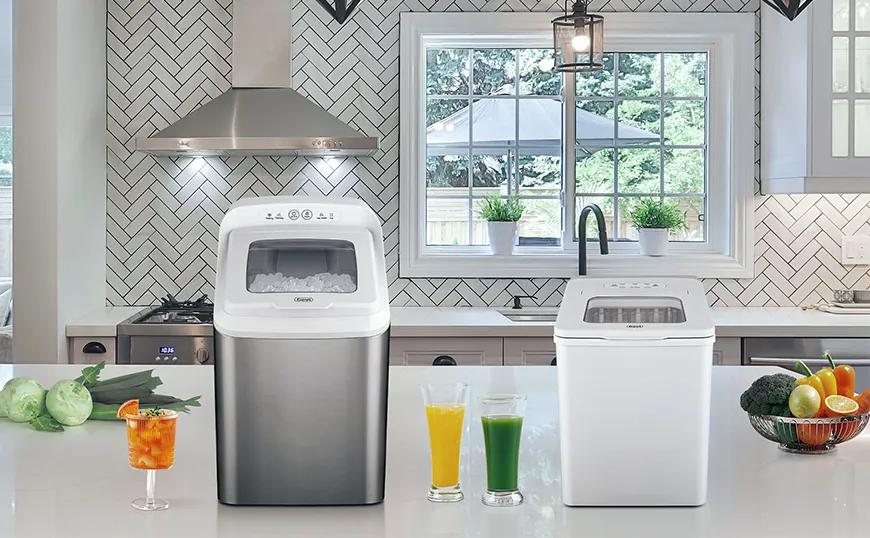
Yes, in most cases. Running a countertop ice maker for a few hours costs less than a single bag of ice from the store, and you get fresh ice whenever you want it. The trade-off is that you’re paying for the machine upfront and giving up counter space.
This isn’t for you if you only use ice a few times a month. In that case, a bag from the store is simpler and cheaper. But if your household goes through ice daily, the machine pays for itself over time.
When an Ice Maker Starts Using Too Much Power
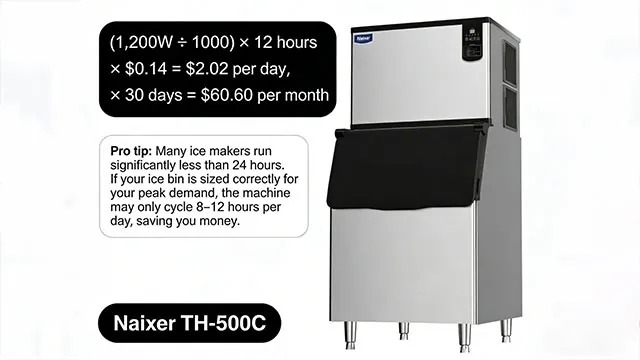
If your machine suddenly runs longer, makes less ice, or feels warm on the outside, something’s off. These are the usual reasons.
Why is my ice maker running all the time?
The most common cause is poor airflow. Dust builds up on the vents and the machine can’t release heat, so it keeps running to catch up. Unplug it, wipe the vents, and give it space on all sides.
Why is my ice maker making less ice than before?
A dirty water tank or a clogged filter slows production. Clean the tank with warm water and check the filter if your model has one. Hard water leaves mineral buildup that hurts performance over time.
Why does my ice maker feel hot?
Some warmth is normal — that’s the heat being pushed out. But if it’s too hot to touch, stop using it and check the vents. Never open the outer cover or touch the parts inside; the capacitors can hold a dangerous charge even after unplugging. That work belongs to a qualified technician.
Frequently Asked Questions
Can I leave my ice maker plugged in all the time?
Yes, it’s safe to leave it plugged in. The machine cycles on and off by itself, so it won’t run constantly. It uses a little more power this way, but nothing dramatic.
Does an ice maker use more electricity than a fridge?
No. A countertop ice maker draws less than a full-size refrigerator. A fridge runs 24 hours a day, while most ice makers only run for a few hours.
How much does it cost to run an ice maker for an hour?
At a typical US rate, running a 150-watt machine for an hour costs only a few cents. Check your own rate to get the exact figure for your area.
Plug your ice maker into a cheap power meter for a week if you want to see your real usage. That reading beats any estimate, and it tells you whether your machine is working harder than it should.