
Clothes hangers are one of those household items most people never think about until something slides off, a shoulder gets a crease, or a closet rod gives way. Yet the different types of clothes hangers available today solve very specific problems — from delicate silk blouses to heavy winter coats to a tiny apartment closet. The right hanger protects the garment, saves space, and keeps the shape of the clothing intact. The wrong one stretches necklines, dents shoulders, or wastes precious rod space. This guide walks through every major category, what each one is best for, and how to match a hanger to the job.
Key Takeaways
- Velvet hangers grip slippery fabrics and save roughly half the rod width compared with wood or plastic.
- Wooden hangers are the go-to for suits and coats because they hold structure and support weight.
- Wire hangers are cheap but can rust and leave sharp creases in knitwear.
- Specialty hangers (clips, cascading, shoulder-shaped, pants bars) solve specific garment problems.
- Match hanger material and width to the garment’s weight and fabric — delicate items need wide, smooth support.
- Heavier garments like coats and leather jackets need hangers rated for 10 pounds or more.
The Core Types of Clothes Hangers
Most hangers fall into a handful of material and design families. Understanding these first makes the specialty options easier to sort.
| Hanger Type | Best For | Main Drawback |
|---|---|---|
| Velvet/flocked | Blouses, camisoles, thin knits | Can’t hold heavy coats |
| Plastic | Everyday shirts, kids’ clothes | Slippery, can snap |
| Wooden | Suits, blazers, coats | Bulky, costs more |
| Wire | Dry cleaning, tight spaces | Rusts, creases fabric |
| Metal (chrome/stainless) | Pants, structured tops | Slippery without grips |
Velvet and Flocked Hangers
Velvet hangers have a thin, fuzzy coating that creates friction, so silky and strappy garments stay put without clips. Their slim profile is why they’re popular in small closets — they can free up a significant amount of hanging space. They’re not built for heavy items, though, and the coating can wear down over time.
Plastic Hangers
The standard molded plastic hanger is inexpensive and widely available. It works fine for light shirts and children’s clothing, but smooth plastic lets wide necklines slip off, and thin plastic can crack under a wet coat.
Wooden Hangers
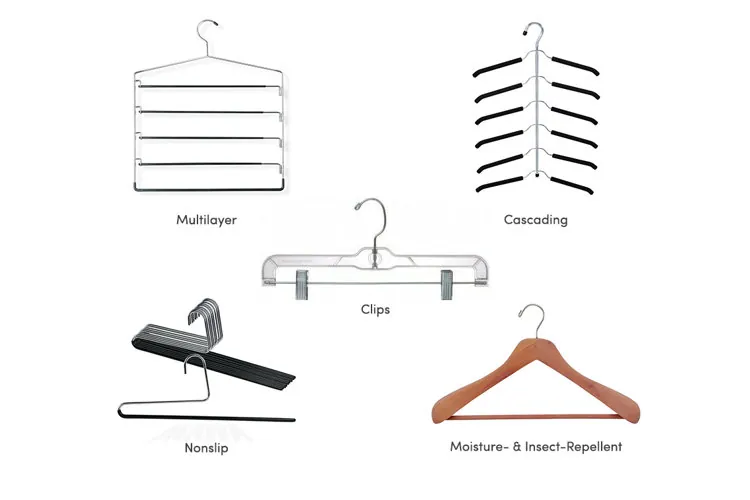
Wooden hangers — often maple, cedar, or lotus wood — are heavier and hold their shape, which makes them ideal for structured garments like suits and blazers. Cedar varieties are sometimes marketed for pest resistance, though the evidence for that’s limited. Their bulk means they take up more rod space.
Wire Hangers
Wire hangers are what dry cleaners typically return. They’re thin and cheap, but the thin gauge can leave sharp shoulder creases, and bare metal may rust and stain fabric. A CPSC recall history exists for some low-quality wire hangers with sharp ends, so inspect them.
Specialty Hangers Worth Knowing
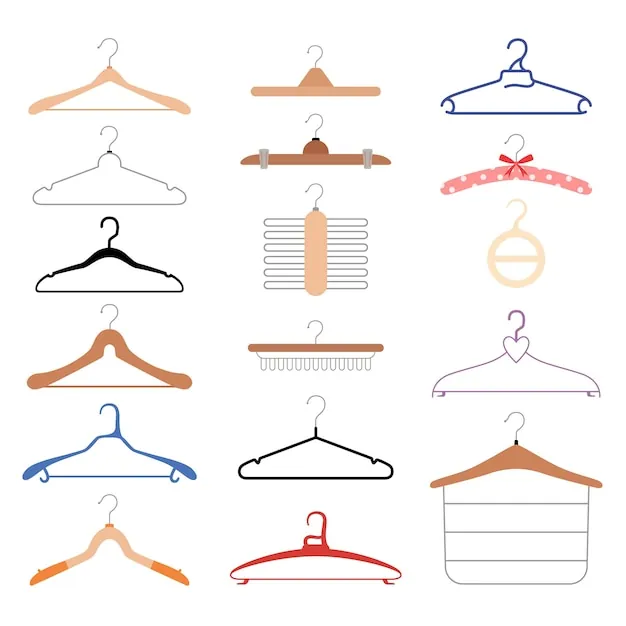
Beyond the basics, several designs target specific garments.
Clip Hangers
Two adjustable clips hold skirts, trousers, and shorts by the waistband. Look for rubberized or padded clips to avoid leaving marks.
Cascading and Multi-Tier Hangers
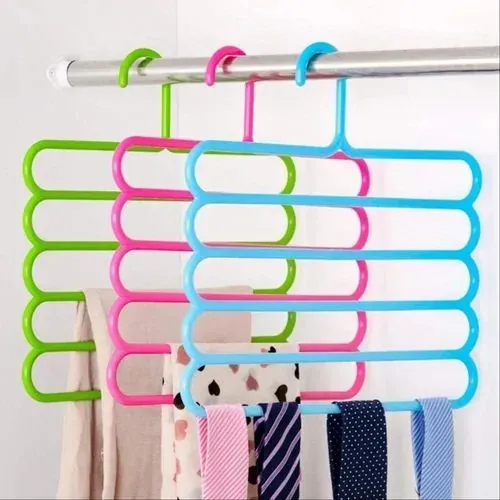
These stack several garments vertically on one hook. They’re useful for pants, scarves, or tank tops when rod space is tight but vertical space is available.
Shoulder-Shaped Hangers
Contoured to mimic the human shoulder, these prevent the “pointy shoulder” bumps that flat hangers cause in sweaters and jackets. They’re a good match for knitwear and delicate blouses.
Pants Bar Hangers
A felt or wooden bar lets you drape trousers folded over it rather than clipping them. This avoids clip marks and works well for wool and linen.
How to Choose the Right Hanger
Match the hanger to the garment’s weight and fabric rather than buying one type for everything.
- Heavy coats and leather: wide wooden or heavy-duty metal, rated 10+ lbs
- Suits and blazers: contoured wooden hangers with a trouser bar
- Delicate blouses and silk: velvet or padded hangers
- Knitwear: folded on a shelf is best; if hanging, use a wide contoured hanger
- Pants and skirts: clip hangers with padded clips
- Kids’ clothes: small plastic or velvet hangers sized to the garment
Pro Tip: Rotate all hangers to face one direction, then flip each one as you wear the item. After a season, you’ll see exactly what you never wear.
Hanger Sizes and Weight Limits
Sizing matters more than most people realize. Standard adult hangers run about 16 to 17 inches wide; children’s sizes run 10 to 14 inches. Using an oversized hanger on a small garment stretches the shoulders.
| Garment | Recommended Width | Weight Capacity |
|---|---|---|
| Kids’ clothing | 10–14 in | 2–5 lbs |
| Light shirts/blouses | 15–16 in | 5–8 lbs |
| Suits and jackets | 17 in | 8–12 lbs |
| Heavy coats | 17–18 in | 10–20 lbs |
Warning: Overloading a thin plastic or wire hanger with a wet or heavy coat is the most common cause of closet-rod sag and hanger failure.
Common Mistakes to Avoid
- Hanging sweaters on thin wire or plastic, which stretches shoulders
- Using metal hangers for damp clothing, which promotes rust stains
- Mixing hanger types randomly so garments sit at uneven heights
- Ignoring weight limits on slim velvet hangers
- Hanging heavy bags by their straps on standard hangers
Frequently Asked Questions
What is the best hanger for delicate clothes?
Velvet or padded hangers work best for delicate fabrics. The soft, grippy surface holds slippery material without clips or sharp edges, and the wider profile supports the shoulder seam so lightweight fabric doesn’t stretch or crease. Avoid wire hangers for anything sheer, silky, or finely knit.
Are wooden hangers better than plastic?
For structured, heavier garments like suits and coats, yes — wood holds shape and supports more weight. For everyday light shirts and kids’ clothes, plastic is cheaper and perfectly adequate. The right choice depends on the garment, not a universal winner.
Do velvet hangers really save closet space?
Yes. Their slim profile means you can fit noticeably more garments on the same rod compared with bulky wooden hangers. The trade-off is lower weight capacity, so reserve them for lighter items and keep heavy coats on sturdier hangers.
What hanger should I use for pants?
Clip hangers or pants-bar hangers are the standard choices. Clips hold the waistband and let pants hang straight; a padded bar lets you drape folded trousers to avoid clip marks. Both protect the fabric better than folding pants over a thin wire hanger.
Can wire hangers damage my clothes?
They can. Thin wire leaves sharp shoulder creases in knits and can rust, staining fabric, especially if clothing is damp. They’re fine as a short-term option from the dry cleaner but aren’t ideal for long-term storage of nice garments.
How much weight can a hanger hold?
It varies widely. Thin plastic and wire hangers may hold only 2 to 5 pounds, while heavy-duty wooden or metal hangers can support 10 to 20 pounds. Always check the garment’s weight against the hanger before hanging a heavy coat.